Recently, a sense of wonder has been growing in our Senior Preschool room as children turned their attention skyward.
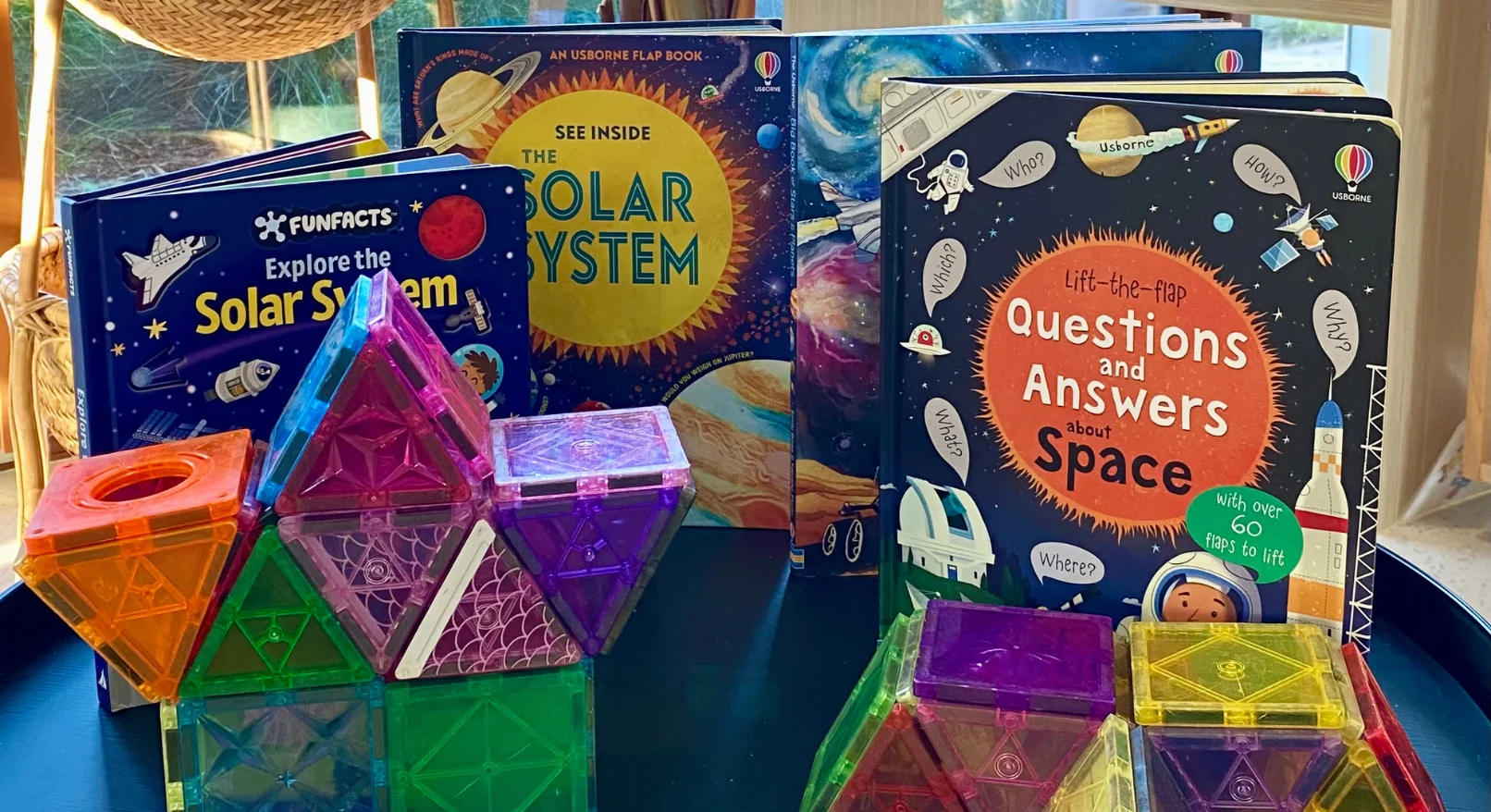
A carefully chosen selection of space‑themed books has been displayed in the room, including Fun Facts: Explore the Solar System, See Inside the Solar System, and Question‑and‑Answer About Space. These resources quickly became a focal point for shared conversations, questions, and discoveries.
This interest was sparked by children’s curiosity about the recent Artemis II launch. As they talked about what they had seen and heard, discussions naturally unfolded about planets, rockets, astronauts, and what space travel might be like. The books provided a way for children to revisit these ideas, explore them further, and clarify their thinking together.
Children extended this interest through hands‑on learning, designing and constructing their own space shuttles using available materials. As they built, they talked about countdowns, engines, and what happens when a rocket launches into space. These moments of collaborative play were rich with problem‑solving, imagination, and language as children shared ideas and negotiated designs.
What stood out was the diversity of thinking within the group. Some children brought a surprising depth of existing knowledge about planets and galaxies, while others posed thoughtful questions about Earth’s place in the universe and what might exist beyond what we can see. These questions created opportunities for educators and children to explore answers together, modelling curiosity and research as a shared process.
Although space is not something children experience directly, their curiosity about it is strong and genuine. Exploring space through books, construction, and open discussion supports the development of early research skills, scientific thinking, and a sense of wonder about the wider world. It also reminds us how powerful children’s interests can be in guiding meaningful learning experiences, even when those interests stretch far beyond our own planet.
We look forward to seeing where the children’s questions and imaginations will take them next.